When Captain Brian Boehm takes anglers out on the Tampa Bay Flats, he loves to see it through their eyes — the undeveloped shorelines, the diversity of wildlife, and the ephemeral qualities that have drawn locals and visitors alike to the water for generations. “You could drive through and think it’s a preserve in places,” he says. “When people see the unbelievably beautiful scenery, catch a big fish, or see a sea turtle’s head pop up, I get the same joy that I had the first time I saw it.”
Stretching 400 square miles along Florida’s west-central Gulf Coast, Tampa Bay is the state’s largest open-water estuary, home to more than 200 species of fish as well as manatees, dolphins, great blue herons, and other wading birds.
If you get up early enough to catch the sun rising over the flats, you might see Thean Toeuy fishing for redfish as they’re searching the seagrass for food, fish tails flapping in the air. Toeuy, a Tampa native, loves spotting seahorses, crabs, and puffer fish, too. “The flats hold a wide variety of beautiful animals and plants that normally people don’t see,” he says. Toeuy sometimes fishes off the beach to catch some dinner, “but most of the time I do catching and releasing. We want the fish to thrive in our area.”
The Grass Beneath the Water
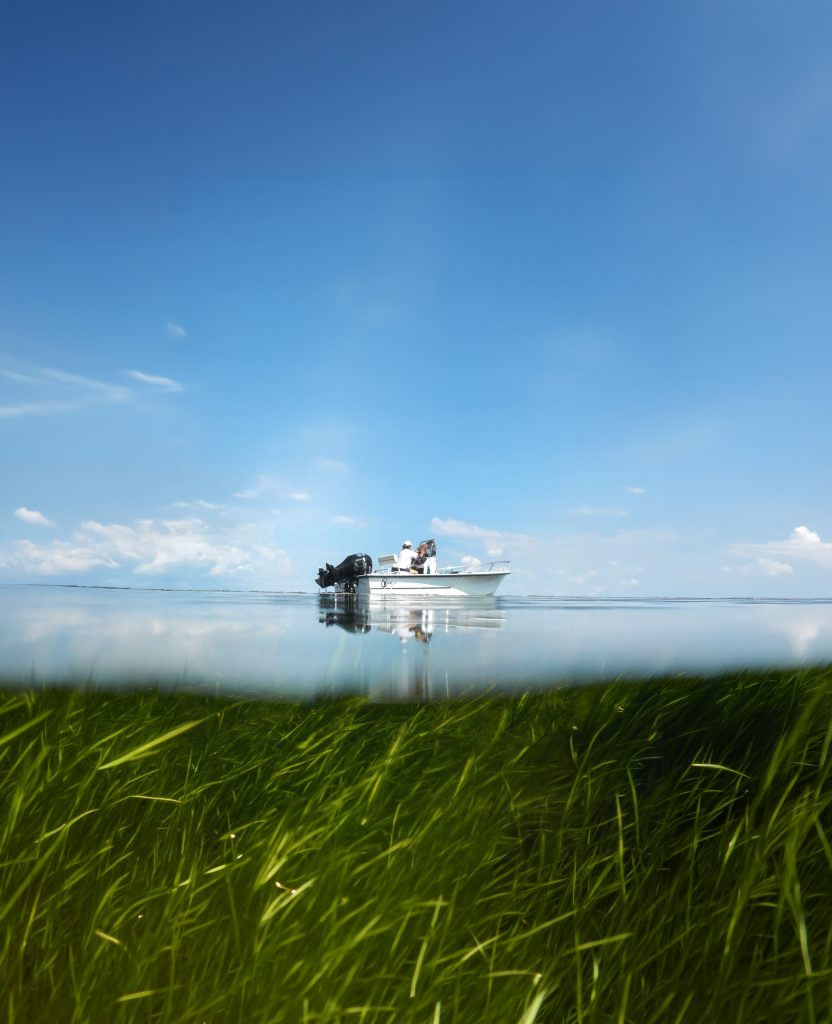
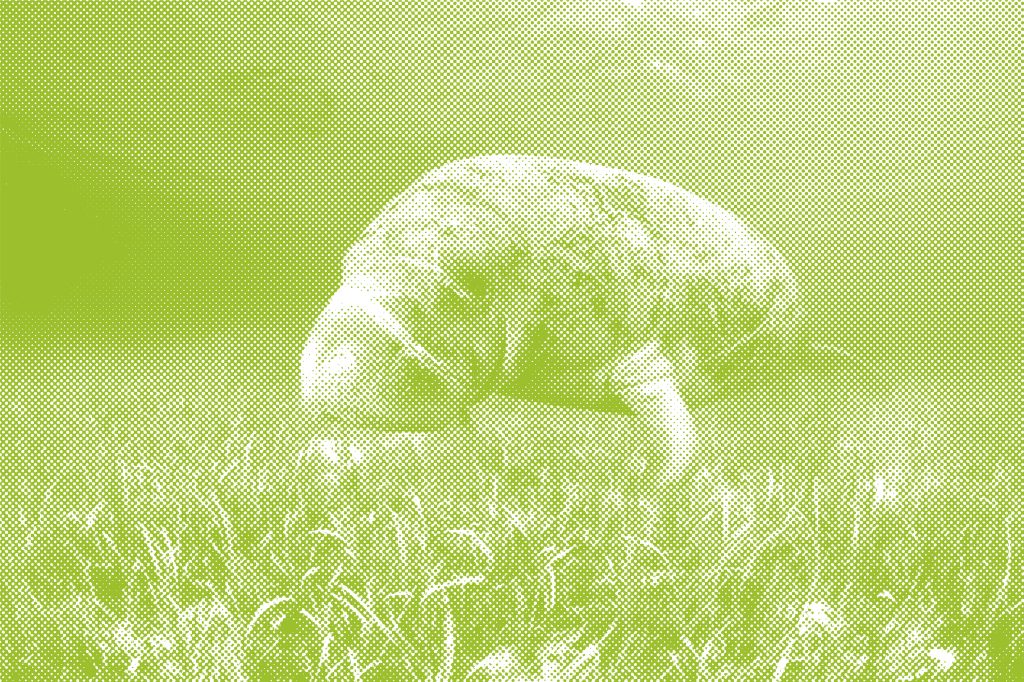
Toeuy and others will tell you it’s not just the fish, though. The Tampa Bay Flats are as much a story about plant life as marine life. Specifically, seagrass beds provide a fragile and vital ecosystem that locals are working hard to protect. Seagrass is where the juveniles of all sorts of marine life live. It’s the sole source of food for the local manatees. For anglers, healthy seagrass means a large and healthy fish population.
Protecting the seagrass is urgent work. Dr. Savanna Barry, a regional specialized agent with UF/IFAS Florida Extension Sea Grant Program, educates boaters and anglers about what they can do to protect this natural resource. The biggest risk boats pose to seagrass is propelling into too-shallow water, which can cause scarring — damage to the sea floor that uproots the seagrass and destabilizes the bottom sediments, so they’re more subject to erosion.
“We have found that when we show boaters aerial images of popular fishing spots with really heavy scarring of the seagrass, people are concerned,” Barry says. “Often just having a picture of the problem in an area they care about makes them inclined to be more careful.”
An Old Florida That Still Exists
Max Chesnes is an East Coast transplant who moved here a few years ago to become an environmental reporter for The Tampa Bay Times. He grew up making trips to Florida with his father and uncles to fish the Florida Keys, so being here in Tampa Bay feels like a homecoming of sorts. “Tampa Bay really has brought me back to those early days of my childhood,” he says. “The amount of life you’ll see in just a short time frame is truly spectacular. I was out here recently, and we saw a mother and a calf dolphin in the same hour that we saw horseshoe crabs, hermit crabs, and tailing redfish right up against these beautiful islands. People like it because it is a visual reminder of an old Florida that still exists. There are still swaths of wild spaces that are largely untouched by human development, and I think people really want to keep it that way.”
The waters that inspire that conservation instinct sometimes change people’s lives entirely. Mike Goodwine was a committed bass fisherman until the day he decided to try saltwater fishing. “When I caught my first redfish, I knew right then and there I was done with bass fishing forever,” he says. “These fish will give you a fight.”
Before long he was taking friends on the water and even accommodating requests from people who saw YouTube videos featuring the giant redfish and snook he was catching. A friend urged Goodwine to get his captain’s license and then surprised him by signing him up for Sea School and covering the tuition.
Once official, Goodwine set himself apart not only with his fishing prowess but his friendly demeanor, hoping to defy the stereotype of the “old grouchy, salty captain,” he says. “I’m the ‘happy captain,’ just being myself, having fun, and teaching people how to fish.”
Goodwine is also pretty sure he was the first Black captain in all of Tampa Bay (now there are two).
“It’s hard to want to be something if you haven’t seen somebody who looks like you do it before,” he says. “I’ve had plenty of messages saying I’m an inspiration, and when they grow up they want to do it. If I never catch another fish in my life, but one person becomes a captain because of me, I’ll feel like I’ve done my job.”
Goodwine has been doing it long enough to see declines in the seagrass and is grateful for the efforts of groups like Tampa Bay Watch, Tampa Bay Waterkeeper, Captains for Clean Water, university scientists, and volunteers to restore it.
He also spreads the word to other captains as often as he can. Chesnes says he’s not alone in that.
“The history of the Tampa Bay estuary is this larger story of a community working together to restore an estuary that has suffered a large decline in seagrass coverage for several years, so oftentimes you’ll hear Tampa Bay referred to as a restoration success story. And the challenge is keeping that success.”
Boehm says the anglers he takes out on the Bay are as vested as anyone. “They come from all over, and a lot have seen destruction in their own home waters, so when they come here, they’re big-time conservation minded,” he says.
There are local regulations in place about what fish can be caught and kept, but Boehm says the anglers he meets ignore all that — they release everything they catch. “We actually go out and see the fish before we cast to it, so we’re sight fishing,” he says. “We’re making it as hard as it can be to fish because we want the challenge. People who do that have so much respect for the game they’re pursuing that they can’t even imagine keeping it.”